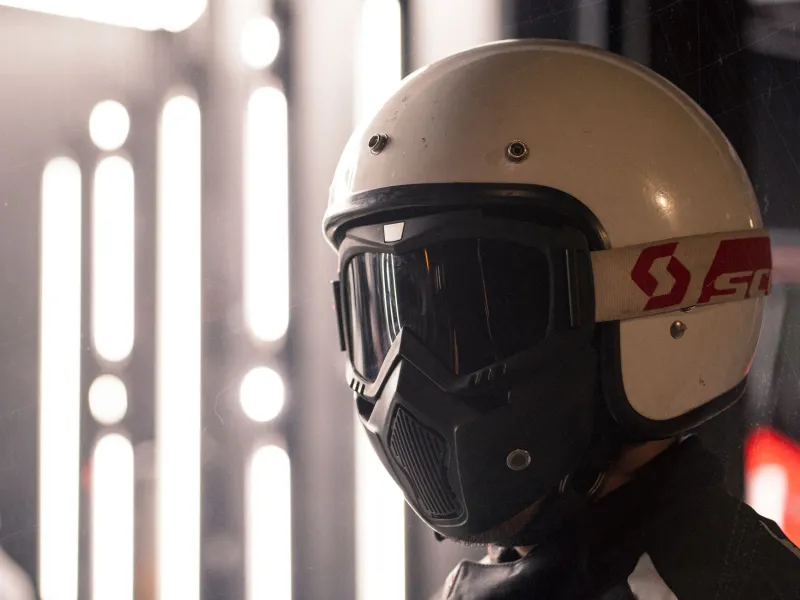
Before You Clip It On: A Rider's Audit for Demo, Loaner and Shared Helmets
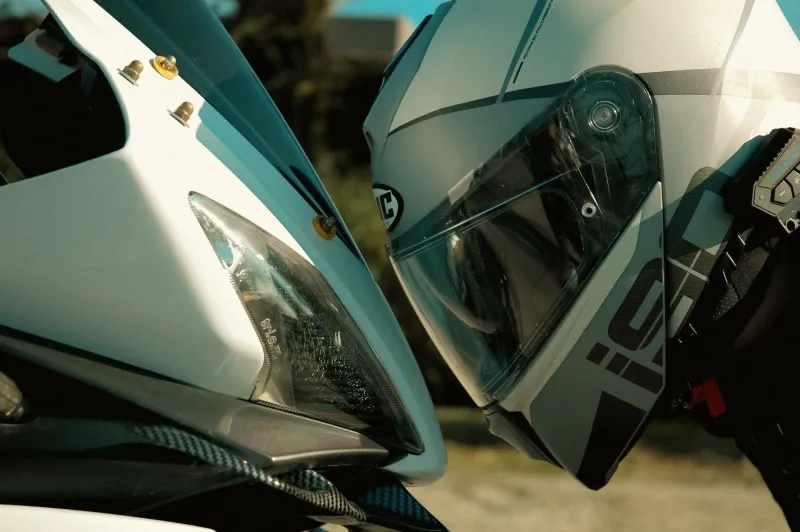
Trying a helmet before you buy is sensible. Helmets are expensive, fit is personal, and a ten-minute wander around a shop can tell you more than a size chart ever will. The same goes for track-experience loaners and dealer demo lids: they let you sample a shape, a weight or a visor mechanism without committing.
But a borrowed helmet is not a blank slate. It has a history, even if nobody can tell you exactly what that history is. It may have been dropped on a shop floor, stuffed into a van, worn by a sweaty stranger or cleaned with something that left the liner stiff. So before you clip it on, treat it like any other safety item: inspect, ask questions, and be willing to walk away.
Start with permission and a proper look
Ask the shop or organiser whether you can inspect the helmet inside and out. A good dealer will not mind. If the answer is no, that is your answer. You cannot assess a helmet you are not allowed to handle.
Look at the shell in good light. Small scuffs from shelf wear are one thing. Cracks, spidering in the paint, deep gouges, loose trim or a visor mechanism that feels sloppy are quite another. Pay attention to the areas that take the first hit in a drop: the crown, the sides and the rear rim. A helmet that has fallen onto a hard floor may look fine but still have compressed the protective liner inside. You cannot see that damage from the outside, which is why a known impact history matters more than a shiny shell.
Check the label and date code if one is visible. Helmets do not last forever, and a demo lid that has been sitting in a window or a dusty stockroom is not the same as a fresh one. If the history is vague and the helmet looks elderly, do not let it be the thing between your head and the road.
The liner tells its own story
Pull the cheek pads gently and look at the comfort liner. Are the pads compressed, cracked or crumbling? Is the stitching coming away? Does the foam feel hard rather than springy? A liner that has packed out will not hold your head properly, and a loose helmet is not a safe helmet.
Then there is hygiene. Shared helmets collect sweat, skin oils, cosmetics and whatever was on the last rider's hair. A removable, washable liner is a good sign. Ask when it was last cleaned. If the helmet has a fixed liner and smells of stale sweat, do not be hero about it. Surface sprays and wipes are useful, but they do not deep-clean foam. A clean own balaclava or helmet liner can act as a barrier, but it is not a substitute for a helmet that has been properly looked after.
Straps, buckles and the bits you trust at speed
Run the chin strap through your fingers. Look for fraying, cuts, UV fading and stiffness. Check the buckle or retention system. Does it engage cleanly? Does it release without a fight? If it is a double-D setup, are the rings secure and free of sharp edges? If it is a quick-release or magnetic buckle, does it lock with a positive click?
A damaged strap or buckle is a hard no. It is not a minor inconvenience. It is the part that keeps the helmet on your head when everything goes wrong.
Visor and mechanism
Look through the visor from the inside as well as the outside. Scratches, cracks, delamination and heavy fogging are all reasons to pass. Check that the visor opens and closes smoothly and sits flush against the seal. If it has Pinlock posts, make sure they are not broken or missing. A visor that flaps or will not seal at speed turns a cold morning into a miserable one, and a cracked visor is a sharp edge near your eyes.
If the visor is tinted, think about the conditions you will be riding in. A dark visor on a dark winter commute is not a clever trade. For track use, make sure the helmet carries whatever marking the organiser requires.
Fit is not a vibe
A borrowed helmet may be the right size on paper and still the wrong shape for your head. Put it on and check for pressure points at the forehead, crown and cheeks. It should feel snug and even, not tight in one spot and loose in another. Do the roll test: with the strap fastened, try to rotate the helmet forward and back. Your scalp should move with it. If the helmet slides easily, it is too loose.
Wear it for a few minutes if you can. A helmet that is already uncomfortable in the shop will not improve on a motorway. Do not accept the line that it will pack out and feel better later, especially with a loaner. It might pack out, but it might also pack out into the wrong shape.
When to say no
Refuse the helmet if it has a known drop onto a hard surface, if the shell is cracked, if the buckle or strap is damaged, if the liner is crumbling or disgusting, if the visor is cracked or badly scratched, if the fit is wrong, or if nobody can tell you anything about its history. You do not need to make a scene. A simple thanks, but I am not comfortable wearing this one is enough.
A demo or loaner helmet is a useful sizing tool and a decent way to test a brand before you buy. It is not a free pass around the safety questions. Inspect it, ask about its past, protect your own hygiene and walk away when something feels off. Your own helmet, chosen for your head and looked after from day one, is always the better long-term answer.