Specs Under a Full-Face: Fit, Fog and the Morning Commute

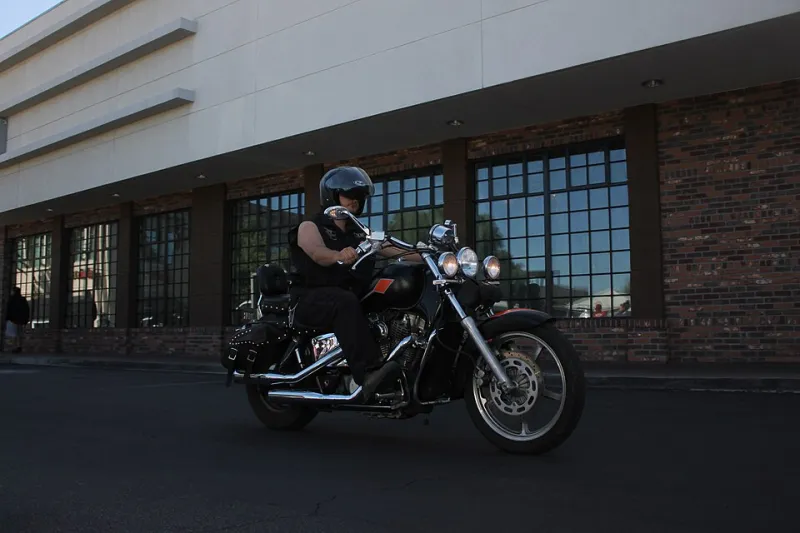
Photo: Adam Jones Adam63, CC BY-SA 3.0, via Wikimedia Commons
There's a particular kind of misery that only glasses-wearing riders know. You've got your lid on, your gloves on, your bike warmed up, and then you realise your specs are sitting slightly crooked because one temple is being pressed into your head by a cheek pad. Or you pull up at a junction on a January morning and both your visor and your lenses have turned into a bathroom mirror. It's not a niche problem, either. Plenty of UK riders wear prescription glasses under a helmet every day, and the good news is that a bit of planning makes the whole thing far less annoying.
At KB Helmets UK, we'd rather you sorted this out before you're balancing on one foot at a petrol station forecourt. So here's the practical version: what to look for in fit, how to get glasses on and off without bending them, and how to deal with fog when the temperature drops.
Start with the shell, not the specs
The biggest mistake is buying a helmet a size up because your glasses feel tight. That's backwards. A helmet that's too loose can move in a crash, and it won't protect you properly no matter how comfortable your glasses feel. The shell and liner should be snug around your head, with even pressure and no sharp hot spots. If the only issue is pressure at the temples, look at the helmet's internal shape and cheek pad setup rather than going up a size.
Try helmets on with the glasses you actually ride in. Not your spare pair, not your sunglasses, not the ones with the thick acetate frames. Wear them for a few minutes in the shop, then again with a thin balaclava or neck tube if that's your winter routine. A helmet can feel fine for thirty seconds and become a headache after twenty minutes. If you can, sit on a bike or lean forward slightly, because pressure points often show up when you're in riding position.
Liners and cheek pads: the hidden pinch points
A lot of modern helmets have glasses-friendly features, even if the shop doesn't make a song and dance about them. Look for cheek pads with channels or cutouts around the temple area. Some brands offer different thicknesses of cheek pad, so you can fine-tune the fit without changing shell size. Removable and washable liners are also worth having, because clean pads sit more predictably and don't get greasy and compressed over time.
Don't start cutting foam out of a liner yourself. That's a quick way to ruin the fit and compromise the helmet. If the manufacturer offers a thinner cheek pad or an alternative liner, use that. If not, try a different helmet. Flip-front helmets can make life easier for glasses wearers, but check the manual before you assume you can ride with the front flipped up. Many are only designed to be used closed while moving, and the last thing you want is to trade convenience for a safety problem.
The frame itself matters too. Thin temples and flexible hinges are your friends under a helmet. Thick arms and stiff frames are more likely to get dragged out of shape or press against your head. If you ride every day, it's worth having a second pair with a slimmer frame for biking, especially if your everyday glasses are expensive or fragile.
Getting them on and off without a frame funeral
There's no single method that works for every helmet and every head, but the principle is simple: don't force anything. For many full-face helmets, it's easier to put the helmet on first, then slide your glasses through the eye port and over your ears. Use both hands, keep the frames straight, and stop if you feel them bending. Some riders prefer to put glasses on first and then ease the helmet over their head, but that only works if the liner has enough give and you're not dragging the temples.
Taking the helmet off is where a lot of glasses get damaged. If you can, remove your glasses before pulling the helmet off, or use a flip-front and open the front first. With a full-face, pulling the helmet straight up while your glasses are still hooked over your ears is asking for a bent frame. Take your time. It's cheaper than a new pair of specs.
And please don't ride with your glasses hooked into the helmet lining or sitting loose in a pocket. If you need prescription lenses to see properly, they need to be on your face and sitting straight before you pull away. If you don't need them to ride, pack them somewhere safe.
Fog: two surfaces, two plans
Fog is the big one. Your visor fogs because your breath is warm and moist and the visor is cold. Your glasses fog for exactly the same reason, only they're closer to your face and often sit in a pocket of warm air inside the helmet. A Pinlock insert helps the visor, but it won't do anything for your glasses. You need to treat them as two separate problems.
For the visor, a properly fitted Pinlock is one of the best upgrades you can make for UK riding. Make sure the pins are adjusted correctly, the insert is clean, and the seal is sitting flat. A Pinlock that's scratched, dirty or under tension won't work properly. Keep the visor clean with a microfibre cloth and avoid wiping it with your glove at a roundabout. A breath guard and a chin curtain can also reduce the amount of moist air swirling up inside the helmet, and vents should be open when you're moving.
For your glasses, use an anti-fog product that's designed for coated lenses and follow the instructions. Don't scrub them with washing-up liquid and assume that's a permanent fix. Keep a clean microfibre cloth in your jacket, because a smeared lens is almost as bad as a fogged one. At low speed, cracking the visor open a notch can help clear things, but only when it's safe and appropriate. Don't ride at motorway speed with the visor wide open just to demist your specs.
A cold-morning routine that actually works
Before you set off, put your helmet somewhere warm rather than leaving it in a freezing shed or top box overnight. Clean your visor and glasses, check the Pinlock seal, and make sure your breath guard is in place. Put your glasses on last, after your helmet and gloves are sorted, so you're not fumbling with cold fingers. If you wear a neck tube, make sure it isn't pushed up over your nose and redirecting breath straight onto your lenses.
If your glasses fog at a junction, don't ride blind. Pull over somewhere safe, lift the visor, and let things clear. It's a minute of your day versus a very bad decision. The same goes for rain: water droplets on your glasses are harder to deal with than water on the visor, so keep a cloth handy and consider a cap or helmet peak if it helps.
The bottom line
Riding in glasses doesn't have to be a compromise. Get the helmet fit right first, look for glasses-friendly liners and cheek pads, handle your frames carefully, and treat visor fog and glasses fog as separate jobs. A Pinlock, a breath guard, a clean microfibre and a bit of patience will get you through most UK mornings. If you're shopping for a new lid, try it on with your glasses, bring your winter neck tube, and don't settle for a helmet that pinches just because it looked good on the shelf.